


There’s no getting around it. What you eat has a clear and direct impact how you lead. In my 20+ years working with top-performing executives, I’ve seen it again and again (and again). The CEO who swaps carb-heavy boardroom breakfasts for protein-packed, brain-supportive meals feels better and performs better. They make higher quality decisions, recover faster, have a longer career, and outlast the competition in the marketplace. It’s about using executive nutrition optimization as a tool for strategic advantage – not chasing fads or trends.
Let’s break down the evidence-backed, time-efficient nutrition strategies that help today’s leaders stay sharp, energized, and biologically aligned to perform at the highest level—without adding complexity to an already packed schedule.
Why Nutrition Truly Defines Executive Performance
Cognitive endurance is a competitive edge. Nutrition is the fuel behind it.
For the C-suite, every moment matters. You’re making high-stakes decisions, managing cross-functional teams, flying across time zones, and responding to crises. Your brain is your most vital asset. And it’s hungry.
Studies show nutrition can improve cognitive performance by up to 40%, particularly in areas like memory recall, focus, and processing speed.¹ In my practice, the first place we adjust isn’t always supplements or sleep. We start with the plate.
What’s the cost of poor nutrition?
- Decision fatigue before noon
- Sugar crashes mid-negotiation
- Poor sleep leading to mental sluggishness
- Weakened immunity from stress and travel
- Slower recovery after tough quarters
The ripple effects are real.
Core Principles of Executive Nutrition Optimization
Here’s where we get practical. These are the core principles I use with executives. Every one is evidence-based. Each is simple to implement.
Meal Timing & Structure
This isn’t about skipping meals. It’s about aligning them with your rhythm.
- Prioritize protein early: 20-30g at breakfast can stabilize glucose and boost focus.
- Front-load your nutrition: Eat your most nutrient-dense meals earlier in the day.
- Plan smart snacks: Think eggs, almonds, blueberries. Not candy from the hallway jar.
A 12:12 eating window works well for most busy leaders. It supports insulin regulation, reduces inflammation, and gives digestion time to rest.
Nutrient-Rich Food Targets
Not all calories are equal. These foods pull more weight for high-performance output:
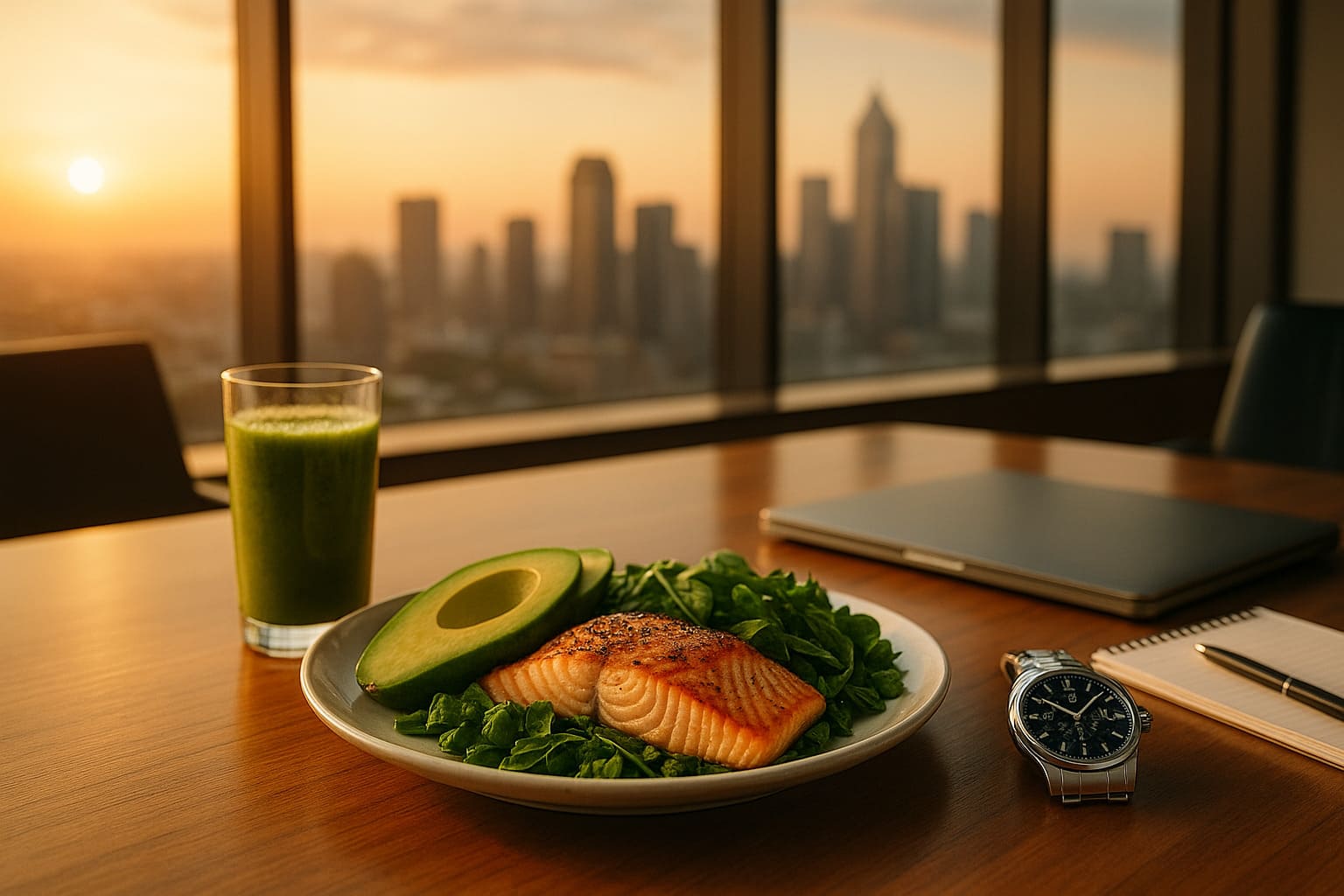
- Omega-3s (DHA/EPA): Support brain health. Found in wild salmon, walnuts, algae oil.
- Polyphenols: Combat oxidative stress. Found in olive oil, berries, and dark chocolate.
- Choline & B-vitamins: Boost memory and neurotransmitter function. Look to eggs, leafy greens, and liver.
- Fibre: Fuels the gut-brain axis. Aim for 30+ grams daily from legumes, greens, and flax.
Hydration & Micronutrients
Most executives I work with are dehydrated and missing key nutrients. That’s silently dragging their energy, immunity, and recovery.
Begin the day with at least 16 oz of water. Replenish minerals through greens, magnesium-rich foods, and electrolytes if needed. Test annually for vitamin D, magnesium, zinc, and B12.
Evidence-Based C-Suite Nutrition Protocol
Here’s the framework I use with leaders looking to upgrade performance without reinventing every meal.
- Cut processed sugar and refined carbs. They spike cognition then crash it.
- Anchor meals around quality protein. Think pasture-raised eggs, wild fish, grass-fed beef.
- Use veggies as your base. Add colour, fibre, and antioxidants.
- Eat within a 12-hour window. Finish dinner by 7 or 8 p.m. if possible.
- Use functional foods and adaptogens as needed, only with professional oversight.
- Monitor reactions to food. Pay attention to brain fog, bloating, or energy dips.
If you wear a CGM or use an Oura ring, you can start connecting meals to performance metrics. That’s real-time feedback. That’s leadership-level precision.
Practical Tips for Busy Executives
You don’t need a full-time chef to eat like a high performer. Here’s how my busiest clients keep it simple:
- Standardize your breakfast and lunch. Choose 2–3 go-to meals and rotate them.
- Batch prep smart snacks. Hard-boiled eggs, turkey jerky, pre-cut veggies, mixed nuts.
- Invest in a quality blender. A 3-minute smoothie can replace breakfast or bridge time zones.
- Supplement wisely. Omega-3s, magnesium glycinate, D3 + K2, and a methylated B complex cover the basics.
- Outsource what drains you. Meal services tailored for execs are worth it. They free your time and decision space.
Real-Life Executive Case Study
Let’s take James, a Fortune 100 CEO I worked with last year. He started most mornings with coffee, a muffin, and maybe a banana. By 10:30 a.m., he felt foggy. By 3 p.m., he was reaching for sugar to power through investor calls.
We swapped in a protein shake: grass-fed whey, MCT oil, berries, and greens. He added eggs two days a week. Lunch became a salmon salad or grass-fed steak with roasted vegetables. No more muffins, no more blood sugar crashes.
The outcome?
- 30% more sustained energy
- Fewer emotional decision swings
- Better post-travel recovery
- Improved sleep and focus during earnings weeks
This isn’t magic. It’s biology plus consistency.
Measuring Impact & Outcomes
Nutrition can feel abstract until you track it.
Use a simple weekly tracker. Rate yourself on:
- Mental clarity
- Mood stability
- Physical energy
- Sleep quality
- Stress response
- Post-travel recovery
If you want precision, test quarterly or bi-annually. Look at fasting insulin, CRP, ferritin, thyroid hormones, vitamin D, and omega-3 index.
You can’t manage what you don’t measure. But you also don’t need to overcomplicate it.
Getting Started & Scaling Up
Want to make a shift without disruption? Start here:
- Optimize your next breakfast. Make it protein-forward.
- Remove the easiest junk food from your workspace.
- Choose one meal to repeat when you’re swamped.
- Keep water within reach all day.
- Consider a high-end meal service if travel is intense.
The way you eat is the way you lead.
It sets the tone. The energy. The culture.
It makes you, you.
Resources & Further Reading
- Cleveland Clinic Executive Health
- American Journal of Clinical Nutrition
- Rhonda Patrick – FoundMyFitness
- Precision Nutrition – Research Library
Here’s What You Need to Do:
Pick one upgrade. That’s all.
Optimize your breakfast. Swap the bagel for a shake. Drop the sugar-heavy snack for almonds.
Build a performance plate one decision at a time.
You’ve invested in your business, your team, your strategy. Now invest in the biology that drives it all.
Your brain is the boardroom. Fuel it like your future depends on it. Because honestly, it kind of does.
— Dr. Maya Thompson
